
How to Choose a Personal Trainer: A Practical Checklist for Beginners
Choosing a personal trainer is hard when every website says the same thing. Here is a practical checklist, the questions to ask and the red flags to watch.
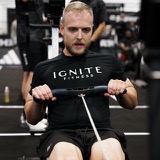 By Luke Robinson, personal trainer in Cuckfield · 8 min read
You have decided to get a personal trainer, and now you are looking at a dozen websites that all say roughly the same thing. Transform your body. Get results. A new you. None of that tells you whether the person is any good, or whether they are the right fit for you specifically.
I am a personal trainer in Cuckfield, so I have an obvious interest in this question. I have tried to write it as though I were helping a friend choose someone who is not me, because almost all of it applies whoever you end up hiring. This is real money and real time. It is worth twenty minutes of thought before you commit.
Start with the boring credentials
A trainer should hold a recognised qualification and carry current public liability insurance. In the UK the usual baseline is a Level 3 Personal Training qualification, and plenty of trainers study further on top of that. Ask directly. Anyone legitimate answers without hesitating, and most have it on their website already. Ask about a current first aid certificate while you are at it.
Insurance matters more than people think. It is not just paperwork. It tells you the person is running a proper business rather than doing a favour with a payment attached. If someone gets cagey about either question, you have learned something useful for free.
What credentials do not tell you is whether somebody can coach. A lot of people pass the exam and never really learn to teach a squat to a nervous 52 year old who has not trained since school. Qualifications are the floor. They are not the ceiling, and they are not the reason you will still be training in six months.
Ask what happens in the very first session
This one question separates most trainers. Ask what session one looks like. If the answer is a description of a workout, be careful. If the answer involves finding out about you first, you are in better hands.
A sensible first session usually covers:
- A proper conversation about your history: injuries, surgeries, medications, anything a GP has told you, how active you used to be and when you stopped
- What you actually want, in your words, rather than a goal the trainer has decided for you
- Some kind of movement assessment, even a simple one, to see how you squat, hinge, push, pull and balance
- A look at your week: work, kids, sleep, travel, when you could realistically train
- An explanation of what the first few weeks will look like and why
You do not need a laboratory. You do need somebody paying attention. If a trainer starts loading a barbell before they know whether you have a dodgy shoulder, that is not enthusiasm, it is carelessness. I go through this in more detail in how the coaching process works, but the principle is simple. Assess, then prescribe. Never the other way round.
The questions worth asking before you pay
Ask these on a phone call or at a consultation. You are allowed to interview them.
- Who do you normally work with? You want somebody who trains people like you, not somebody whose whole roster is 24 year old rugby players
- How do you handle injuries or things that hurt? Listen for whether they work around problems sensibly and know when to send you to a physio or your GP
- What happens if I miss a week? Life happens. The answer tells you how flexible the plan really is
- How do you track progress? If the only answer is the scales, that is thin
- What do you expect from me between sessions? A good coach has a view on this and will be honest that two hours a week is not the whole picture
- Can I speak to you before I commit to anything?
That last one matters most. Every trainer worth hiring will talk to you first. I do a free consultation with everybody, no obligation and no pressure, precisely because both of us need to know whether it is a fit before any money changes hands.
Red flags
That is what the free consultation is for. We talk through your goal, your history and what would realistically fit your week.
None of these are automatic disqualifications on their own. Two or three of them together, and I would keep looking.
- Guaranteed results, or a specific promise about how much weight you will lose and by when. Nobody can honestly promise that
- Selling you supplements at the first meeting
- A plan handed over before any assessment, especially if it looks like it was written for somebody else
- Pressure to sign a long contract on the spot, or a discount that expires this afternoon
- Being on their phone during your session
- Never explaining why you are doing an exercise
- Talking about your body in a way that makes you feel small. Shame is not a training method and it does not last
- Dismissing pain, or telling you to push through something that genuinely hurts
A good coach changes the plan. A weak one repeats it
The difference between a decent trainer and a good one usually shows up around week six. A decent trainer runs you through sensible sessions. A good one notices that your right knee is grumbly on lunges, swaps in a split squat with a different foot position, and quietly keeps an eye on it. They spot that you have been sleeping badly and pull the volume back rather than driving on regardless. They remember what you lifted a month ago without having to check.
Good coaching is mostly attention. Programmes are not secret and there is no magic exercise. What you are paying for is somebody watching closely, adjusting week to week, and holding the standard on the days you cannot be bothered. You are also paying for somebody to tell you the truth: that three sessions a week on five hours of sleep will not get you far, or that your back probably hurts because of eight hours in a car seat rather than anything you did in training.
The practical things that decide whether you actually turn up
People choose a trainer on personality and then quit because of logistics. Be honest about the boring constraints before you sign anything.
How far is it, door to door, at the time you would really be travelling? A twenty minute drive at 6am is nothing. The same drive at half five in the evening in the rain is the reason you cancel. Can you get the same slot every week, or does your diary change constantly? If it changes, you need somebody who can flex, and you should ask about that up front rather than discovering it in month two.
Think about the environment too. Some people are lifted by a busy commercial gym. Others find it a real barrier and simply will not go, which is why I train clients one to one from a private setup rather than on a gym floor. Neither preference is right or wrong, but pretending you will grow to love an environment you dread is how good intentions die in February. If you are local, the pages on training from Haywards Heath and coming over from Balcombe explain how the travel side tends to work in practice.
If you are starting from a long way back
Two free guides, no charge
The four lifts that matter after 40, and how to eat for strength without weighing anything.
Read them freeIf you have not trained in years, or you are carrying an old injury, or you take medication that affects your heart rate or blood pressure, speak to your GP before you start and tell your trainer exactly what they said. Any coach who treats that as a nuisance is the wrong coach. It is information, and it makes the plan better rather than more limited.
Also, and this one costs people years: you do not need to get fit before you hire somebody. That is backwards. Beginners and people coming back after a long gap are the normal client, not the awkward exception. Nobody worth training with is judging your first session.
How to judge it after the first month
Give it four to six weeks, then ask yourself some honest questions. Do you understand what you are doing and why? Are you being made to feel capable rather than inadequate? Has anything been adjusted since week one, or are you repeating the same session on a loop? Are you sleeping better, moving more easily, finding the stairs less of an event?
Those things shift long before your body composition does. If they are all pointing the right way, stay. If you dread every session and feel like a number on a spreadsheet, leave, and do not feel bad about it. Plenty of trainers are good at their job and still wrong for you. The fit is not a small detail, it is most of the job.
One last thing
The best trainer for you is the one whose sessions you will still be attending in six months. Qualifications, insurance and a proper assessment get somebody onto the shortlist. After that it comes down to whether you trust them, whether they listen, and whether getting there is easy enough that you do not talk yourself out of it on a wet Tuesday.
If you are in Cuckfield, Haywards Heath or Balcombe and you want to test some of this in person, the first step with me is a free consultation. No obligation and no sales pitch, just a conversation about where you are now and what would genuinely work around your week. You can get in touch here and we will find a time.
Training in Cuckfield, Haywards Heath or Balcombe? Book a free consultation and I will give you a straight answer about what would work for you.
Book your free consultation