
How Long Does It Take to See Results From Personal Training?
A realistic week by week timeline for personal training results, what changes before the scales move, and why people quit at week three.
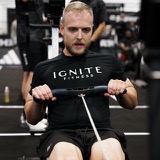 By Luke Robinson, personal trainer in Cuckfield · 8 min read
You want to know when something is going to change. Not in a vague keep at it and you will get there sort of way, but actually: which week, and what will I notice first. It is a fair question, and most trainers dodge it because the honest answer is less exciting than a before and after photo.
So here is the honest version, based on what I see with beginners and with people coming back after years away. Some of it happens sooner than people expect. The bit everyone is really waiting for, the visible change, takes longer than anyone wants to hear.
Weeks one and two: you feel it, you cannot see it
The first fortnight is mostly learning. Your body is working out how to do the movements, and most of the early improvement is coordination rather than muscle. That is why the weights go up quickly at the start and progress feels almost too easy. You are not getting stronger as fast as the numbers suggest. You are getting better at using the strength you already had.
You will probably be sore, particularly after the first two or three sessions. It usually shows up the next day, peaks a day or so later and settles over the following few days. It becomes much less noticeable within a few weeks, which surprises people who assumed training always feels like that.
Some people sleep better almost straight away. Others sleep worse for a week while their body adjusts to training in the evening. Both are common. Nothing on the scales means anything yet, and body weight can even nudge up in the first fortnight because muscles hold more water when you start training them. That is not fat, and it catches a lot of people out.
Weeks three and four: the wobble
Week three is where most people quit. It is worth understanding why, so that it does not happen to you.
By week three the novelty has gone. You are no longer excited about the new thing. The soreness has faded, so you feel less like you are earning something. The weights are still going up but the jumps are smaller. And critically, you look exactly the same in the mirror as you did on day one. The reward has not arrived and the cost is now very obvious.
That is not a sign the plan is failing. It is simply what week three feels like for almost everybody. The adaptations are happening in places you cannot see: connective tissue getting more robust, movement patterns getting more efficient, your body getting better at recovering between sessions.
The people who get results are not the people who feel motivated in week three. They are the people who turned up anyway. This is the strongest argument for having a coach at the start, and it is not really about the exercises. It is about there being a time in the diary and somebody expecting you, which is most of what the coaching relationship actually does in the early weeks.
Weeks four to eight: the first real changes
That is what the free consultation is for. We talk through your goal, your history and what would realistically fit your week.
Somewhere in this window things start to shift in ways you notice without anyone pointing them out.
- Everyday things get easier. Stairs, carrying the shopping in one trip, getting up off the floor, lifting a case into an overhead locker
- Energy through the afternoon is steadier, which is often the first change people mention
- Sleep tends to get deeper
- Sitting at a desk feels less like a slow collapse
- The weights you started with feel light, and you can clearly remember when they did not
- Aches you had written off as permanent, particularly lower back stiffness from sitting, often quieten down
Clothes are usually the first physical clue, ahead of the scales and well ahead of the mirror. Waistbands sit differently. A shirt fits across the shoulders where it did not. That is body composition changing even when total weight has barely moved, because you are adding a little muscle while losing fat. The scales cannot tell those two things apart, which is exactly why they are such a poor tool on their own.
Three months: other people start noticing
Around the twelve week mark the comments start. Someone at work asks whether you have lost weight. A family member notices you look different without being able to say why. This is usually the point at which people who were sceptical about the whole idea quietly decide to keep going.
By three months, with two or three sensible sessions a week, most beginners are considerably stronger than when they started. Not fractionally. Considerably. The change in what your body can do over twelve weeks is genuinely large when you begin from a long way back, and that is the change that keeps paying you back for decades, because strength is what protects your independence later on.
Six months and beyond: it stops being a project
After six months you stop thinking of training as a project with an end date. It is just something you do on Tuesdays and Thursdays. Progress slows, which sounds like bad news and is not. Fast progress is what happens when you start from nothing. Slow steady progress is what happens once you have banked the beginner gains and are building on a decent base.
This is also the point where the muscle and strength that we all lose with age stops being something inevitable you read about and becomes something you are doing something about. That does not photograph well and it will never trend. It is the most valuable thing training gives you.
Why the scales are the worst measure you have
Body weight moves for reasons that have nothing to do with fat. Salt, sleep, hormones, whether you have been to the loo, how hard you trained yesterday, how much carbohydrate was in your last meal. Swings of a kilogram or two from day to day are completely normal and mean nothing. If you weigh yourself every morning and take each reading personally, you will find something to be miserable about most days of the week.
If you want to weigh yourself, do it at the same time on the same day each week and look at the trend across a month rather than any single number. Better still, track things that respond faster and lie less.
- What you lifted, and for how many reps. This is the cleanest evidence that something is working
- How your waistband feels, or a tape measure round the waist once a fortnight
- Photos in the same spot and the same light every four weeks. You cannot see gradual change in a daily mirror. You can absolutely see it across two photos a month apart
- Energy, mood and sleep, scored roughly out of ten each week
- Whether you are still turning up. Attendance is the metric that predicts every other one
What speeds it up and what slows it down
Two free guides, no charge
The four lifts that matter after 40, and how to eat for strength without weighing anything.
Read them freeSleep is the biggest lever most people are not pulling. Consistently poor sleep blunts recovery, appetite control and motivation all at once, and no programme fixes that from the outside.
Protein is the second. Most people I meet are eating less than they think, particularly at breakfast, and then wonder why they stay sore for days and are starving by four in the afternoon.
Alcohol, high stress and skipping sessions in busy weeks all slow things down, though none of them are fatal in moderation. What is fatal is stopping. Two months off in the middle of a good year costs you more than all the smaller things put together. If life gets chaotic, shrink the plan rather than pausing it. Even one short session a week keeps the thread intact and keeps you from having to start again.
The realistic summary
Two weeks: you feel it. Four weeks: things get easier and you sleep better. Eight weeks: your clothes tell you something is happening. Twelve weeks: other people notice. Six months: it is just normal life, and you are stronger than you have been in years.
That timeline assumes you turn up consistently, train sensibly and eat like an adult most of the time. It does not assume perfection, because nobody manages perfection. If you have a health condition, or you have been inactive for a long stretch, have a word with your GP before you start and tell whoever is coaching you what they said.
If you want a straight answer about what is realistic for you specifically, that is exactly what the free consultation is for. I train people one to one in Cuckfield, about five minutes from Haywards Heath, and I am happy to tell you honestly what twelve weeks is likely to look like given your starting point and your diary. There is no obligation attached to it. You can book a chat here.
Training in Cuckfield, Haywards Heath or Balcombe? Book a free consultation and I will give you a straight answer about what would work for you.
Book your free consultation